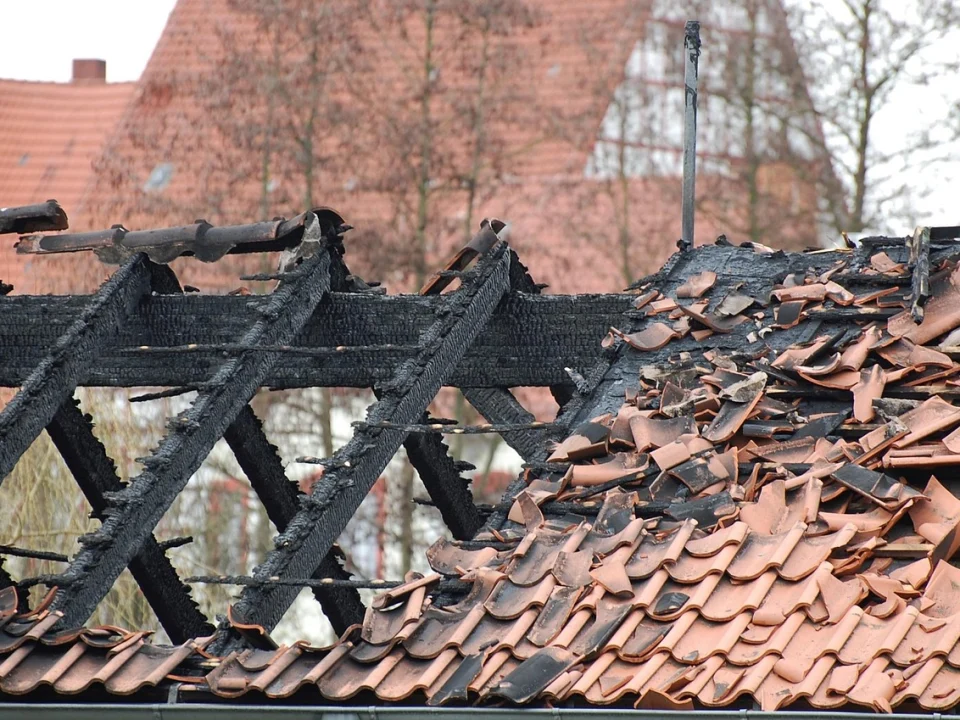
Under the ISO HO-3 specimen forms (2000 and 2011 editions), fire is not excluded for the house, sudden smoke damage is usually covered, and stolen belongings are usually covered at home or away. The hard questions come after: how much is paid and when, how long living expenses run, and which lower limits apply to what was taken. Your policy’s wording decides, and insurers’ own forms can differ.
General information, not legal or insurance advice, and not a substitute for the advice of an attorney. Your policy’s wording and your state’s law decide, and both change. For help with your claim, your state insurance department’s consumer line and legal aid are free.
This section has three guides. After a fire, read them in order; after a theft, start with the third:
- Fire damage insurance claims: what each coverage pays, smoke, the inventory, the payout, wildfire rules and deadlines.
- Additional living expenses (loss of use): what Coverage D pays while you can’t live at home, and for how long.
- Does homeowners insurance cover theft: the theft peril, its special limits, theft away from home and the exclusions.
Fire and smoke: usually covered, then the details
An HO-3 insures the house and your belongings in two different ways. The house (Coverage A) and other structures such as a detached garage (Coverage B) are covered for direct physical loss unless excluded, and fire isn’t excluded. Your belongings (Coverage C) are covered only for named perils; fire or lightning is the first on the list, and smoke is another. The 2000 specimen’s smoke peril covers sudden and accidental smoke damage, furnace “puffback” included, and leaves out smoke from farm smudging or industrial operations; smoke from a wildfire or a neighbor’s fire is in neither carve-out.
The usual exceptions on a fire claim are narrow: a fire an insured person set on purpose (in the specimen, that removes cover even for insureds who had no part in it), neglect after the loss, and fraud in the claim. Once smoke damage is accepted, disputes are more often about what can be cleaned and what must be replaced; ask the insurer to put that in writing.
Belongings usually ask the most of you: the specimen’s duties include an inventory with quantity, description, actual cash value and amount of loss. When the receipts burned, people rebuild it room by room from phone photos and bank statements. California and Oregon ease that after a total loss in a declared disaster; the fire guide sets out both rules.
How the money arrives
Replacement cost (the cost to repair or rebuild with like materials, without deducting for age) is usually paid in two steps. The specimens pay no more than actual cash value (replacement cost minus depreciation) until the repair is done, unless it costs less than both 5% of the building’s insurance and $2,500. You can take actual cash value first and claim the rest later if you tell the insurer within 180 days after the date of loss that you intend to repair or replace. The part held back is often called recoverable depreciation. Our recoverable depreciation calculator runs that sum on your own numbers, and the actual cash value vs replacement cost calculator shows how depreciation is worked out. Both show arithmetic, not a payout.
Checks for the house often name both you and your lender, because the specimen’s mortgage clause pays “as interests appear”. For loans owned by Fannie Mae, money for belongings and living expenses goes to the borrower at once (Servicing Guide B-5-01). Our mortgage check tool shows the release rules we read.
Living somewhere else while the home is repaired
Coverage D, Loss of Use, pays additional living expenses: the necessary increase in what your household spends so it can keep its normal standard of living, not your whole budget. Your mortgage is still yours to pay. It runs for the shortest time needed to repair the home, or to settle elsewhere if you move for good, and stops when the dollar limit on your declarations page runs out. It usually applies only when the damage itself is covered, so an excluded flood brings none, and the NFIP flood policy doesn’t pay living expenses either.
When officials keep you out because a covered peril directly damaged a neighboring property, the form’s Civil Authority part pays for no more than two weeks. Some states set longer minimum periods after a declared state of emergency, always inside the policy’s dollar limit. California: at least 24 months from the inception of the loss, up to 12 more for delays beyond your control, then six-month extensions for good cause (Ins. Code 2060(b)). Oregon: 24 months for the primary home after a loss tied to a declared emergency, with six-month extensions up to 36 months in all (ORS 742.270). Other states may have rules we haven’t read.
Theft: covered anywhere, with lower limits
Theft is a named peril for belongings, attempted theft included, and Coverage C follows your property anywhere in the world, so a laptop taken from a car or a hotel room usually falls under the homeowners policy. The car itself is not covered by the homeowners policy.
Inside the Coverage C limit, the 2011 specimen sets lower special limits per loss. Three apply to theft only: $1,500 for jewelry, watches and furs, $2,500 for firearms, and $2,500 for silverware. Money has a $200 limit for any covered loss. Your policy may show other amounts; an item insured separately on a schedule is covered under that listing instead. The theft peril also leaves out theft by an insured (you and resident relatives, among others), theft at a second home unless an insured is staying there, and theft from a house still being built.
The specimen settles belongings at actual cash value unless you have a replacement cost endorsement, and the deductible comes off the total first, so a small theft may fall below it. The deductible calculator shows how that works on your numbers, and should you file a home insurance claim covers the other things to weigh.
The duties and clocks these claims share
The specimen’s Duties After Loss condition asks the same things on a fire or a theft: prompt notice to the insurer (the form gives no number of days), notice to the police for a theft, reasonable repairs to protect the property with a record of what they cost, the inventory, and a signed, sworn proof of loss within 60 days after the insurer asks for it. Our proof of loss guide explains the form, and how to file a homeowners insurance claim gives the full sequence.
The specimen says a suit must start within two years after the date of loss, and state law often changes that. California’s standard fire policy sets 12 months after inception of the loss, 24 months if related to a state of emergency (Ins. Code 2071); North Carolina’s allows three years (G.S. 58-44-16). Those are the rules in those states; your policy may give you longer, so check its Duties After Loss and Suit Against Us conditions too. The claim deadlines by state table shows each state’s clocks and suit-limit rule where we have read them. Waiting until the last day is never safe.
Investigations, disagreements and taxes
Insurers often look into the cause of a fire, because it matters for coverage. An investigation is not an accusation, but the specimen lets the insurer ask for records and an examination under oath (sworn questioning about the claim). Ask in writing what is needed, and keep copies. Dealing with the adjuster covers the day-to-day contact, and a denied home insurance claim explains the next stage if you disagree with a decision.
On taxes, the IRS says living-expense payments are taxable only above your temporary increase in living costs, and not at all if the casualty is in a federally declared disaster area (Publication 547, 2025). More in is homeowners insurance tax deductible?
Your next step
- Gather: the full policy with its declarations page and every endorsement, the fire department’s incident number or the police report number, photos and video from before cleanup, every receipt, and every letter from the insurer with its date.
- Do now: report the claim in writing, protect the property and keep the receipts, start the inventory and tell your mortgage servicer. After a theft, tell your card issuer and bank too.
- Read: your policy’s Duties After Loss, Loss of Use and Suit Against Us conditions, and its Coverage C special limits.
- Ask: the insurer, in writing, which clause it is applying. If you disagree, your state insurance department’s consumer line is free: find it with our complaint links by state or the NAIC’s directory of state insurance departments. For legal advice, contact legal aid or a licensed attorney through your state bar’s referral service.
- Don’t wait on: a proof-of-loss date the insurer gives you, the 180-day notice in the standard form if you take actual cash value first, any notice-of-claim limit in your state, and the suit limit in your policy and state law.
Sources checked on 8 November 2026: ISO HO-3 specimen forms (2000 and 2011 editions); Cal. Ins. Code 2060 and 2071; ORS 742.270 (2025 edition); N.C. G.S. 58-44-16; Fannie Mae Servicing Guide B-5-01; IRS Publication 547 (2025).